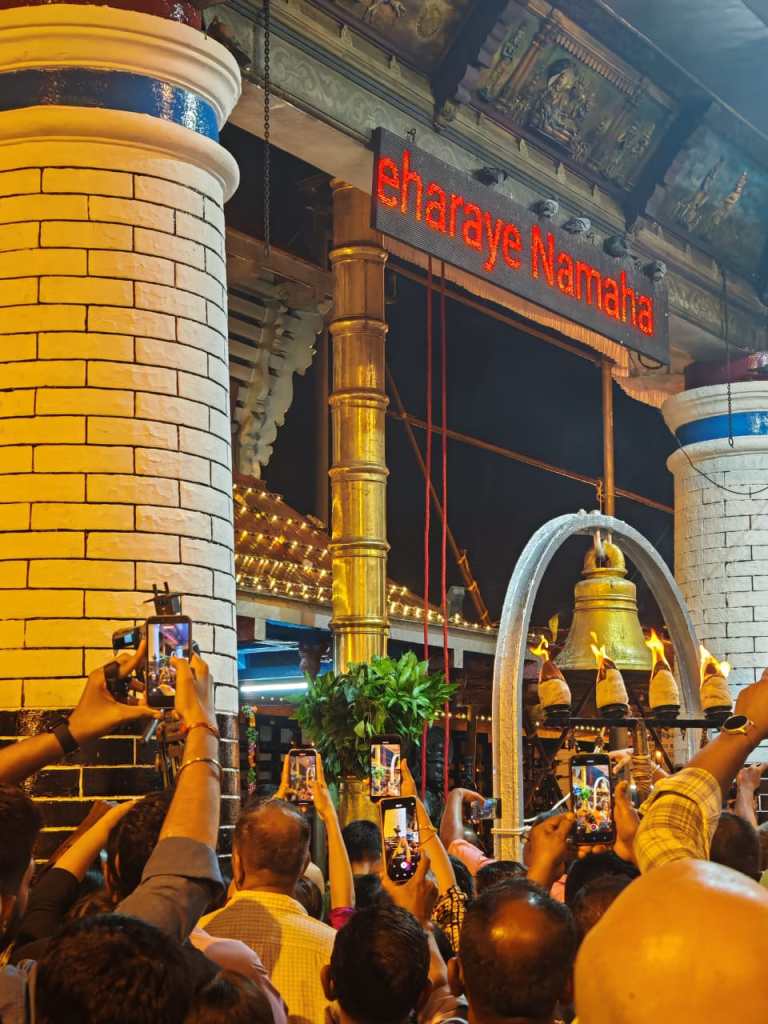
Kerala is a land of rich and ancient festivals that still weave the social and cultural fabric of this place with effortless grace. By November every year, temple festivals begin, and the first one unfolds at the Sree Poornathrayeesa Temple, where I live. Famously known as Vrischikolsavam, a grand utsavam that lasts seven days, it gathers the entire neighbourhood into one pulsating, luminous rhythm. Not to mention the many locals who are now expats in different corners of the world, live-streaming the celebrations with the same enthusiasm as those physically present. Geography may separate, but devotion clearly travels faster than distance and stronger than signal bars.
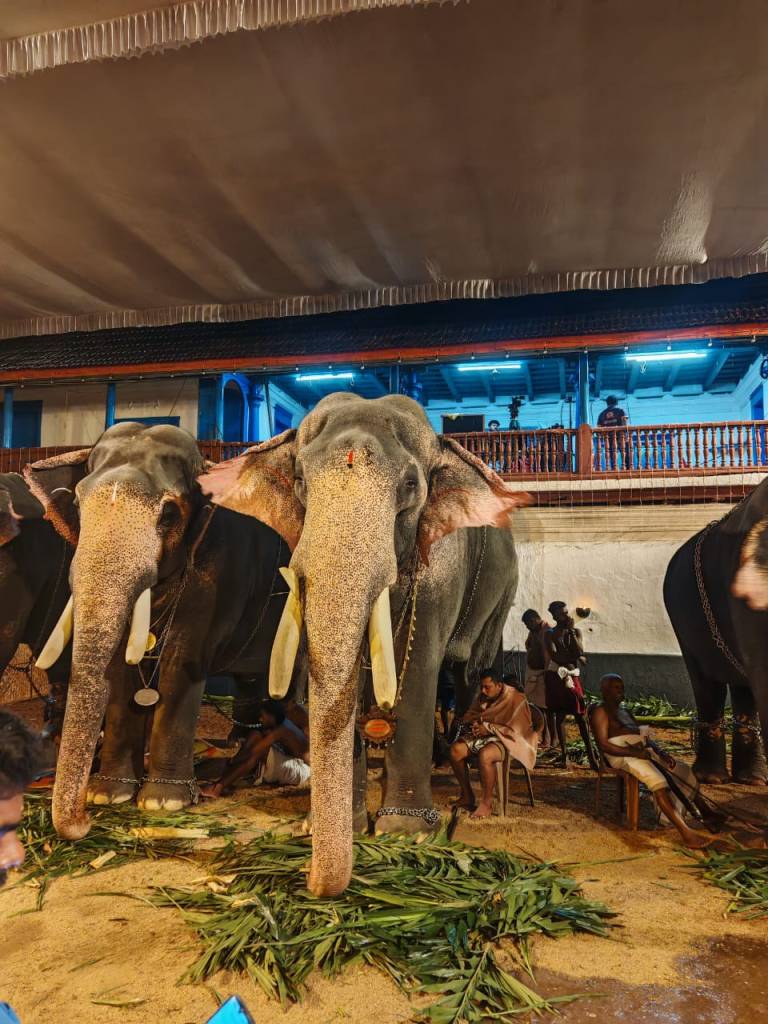
Once this festival concludes, it is almost like lighting the fuse for Kadina Vedi, the popular barrel crackers. The entire coastal stretch slips into a festive mood with local celebrations, not just in temples, but in churches and mosques too, each following their respective calendars. The beauty of Kerala lies in this quiet confidence: people participate in festivities across faiths while holding their own traditions close. Celebration here is less about boundaries and more about belonging.
One such compelling ritual I attended recently was the arrival of Muthappan, literally translated as “Grandfather,” a symbolic representation of Lord Shiva in Theyyam form, popular in the northern parts of Kerala. Growing up in central Kerala, Theyyam has always fascinated me. With roots in Palakkad, I have witnessed ritualistic art forms like Poothan, Thira, and Velichapaadu, all innate to that region. It feels like divine energy possesses the artist’s body, manifesting through them to bless devotees. Almost like a direct appointment with God, no intermediaries required.
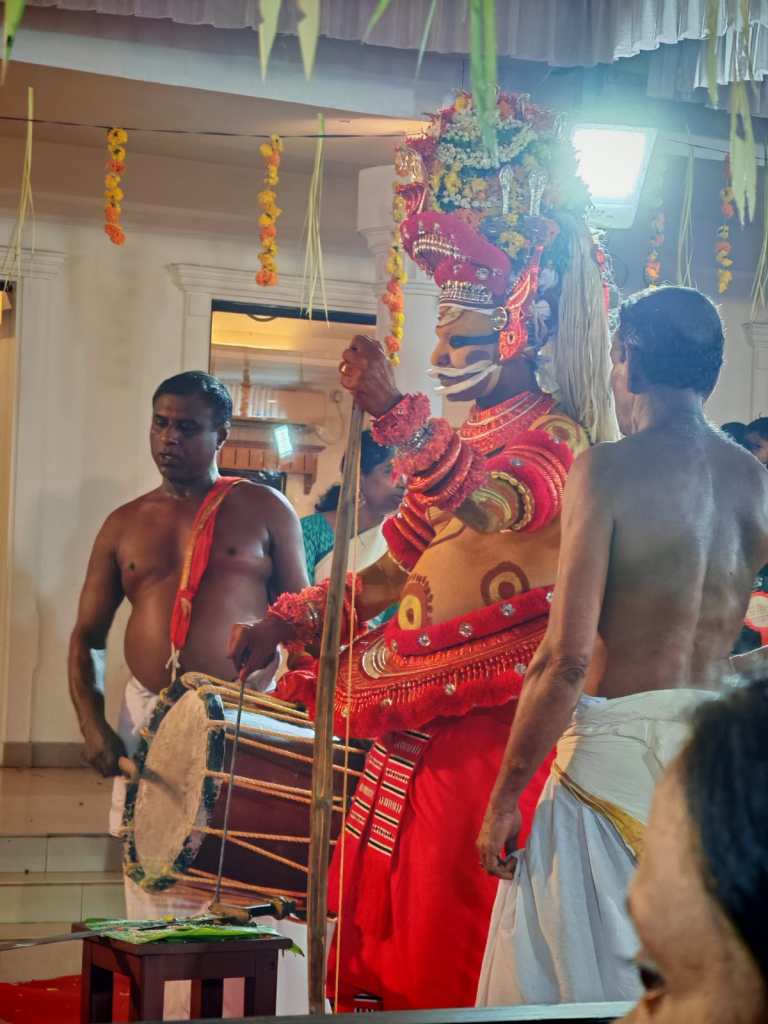
So when Muthappan was making a special visit here, curiosity got the better of me. The kolam, meaning the elaborate makeup and attire, was impressive. I offered my share and waited for my turn to receive his blessings. Honestly, I was in two minds. I watched the ritual with curiosity and wonder rather than devotion. It was all new to me. I did not experience the goosebumps people often describe. I stood there as an observer, quietly analyzing what others were openly surrendering to.
Then came the moment I stood in queue to meet Shiva, adorned and descended as an old man. The mother and daughter ahead of me were deeply immersed in the experience. They had brought specially prepared sweets and generous offerings. I watched as the mother leaned in to whisper her woes into Muthappan’s ear. He listened intently, then suddenly scolded her for presenting only a one-sided story. Without warning, he turned to me and asked in his thick North Kerala Malayalam dialect, “There will be a sound only if you clap with both hands, right?”
I was stunned. First, because I barely understood him. Second, because I did not expect to be pulled into divine arbitration. He repeated the question, this time including the organizer beside me. The organizer promptly replied, “Aa Muthappa,” in firm agreement. Muthappan then proceeded to advise the woman on how to mend her relationship with her husband. I stood there speechless. In that instant, he seemed less like a distant deity and more like a tribal elder dispensing practical wisdom. Spirituality, apparently, also believes in conflict resolution.
Then it was my turn.
I walked up to him and instinctively did what I always do: touched his feet and looked up for a closer view. He looked straight into my eyes and slipped into a trance-like state while plucking flowers from the crown that adorned his head. He gestured for me to open my palm. I did. He showed me his open palm, holding bits of Thumba and Thulasi from his crown.
“Will you keep these Thumba and Thulasi in your hair?” he asked.
I said yes.
He asked if I had anything to tell or ask him. My throat went dry. For once, words abandoned me. Before I could gather a single coherent thought, he began to chant in an incantatory tone:
“Lakshanam otha oru penkodi,
sarva aishwaryamulloru ee desathu vaanarulaan
njan ella anugrahangalum thannarulunnu.”
A graceful and auspicious maiden,
to reign over this land blessed with prosperity,
I bestow upon you all my blessings.
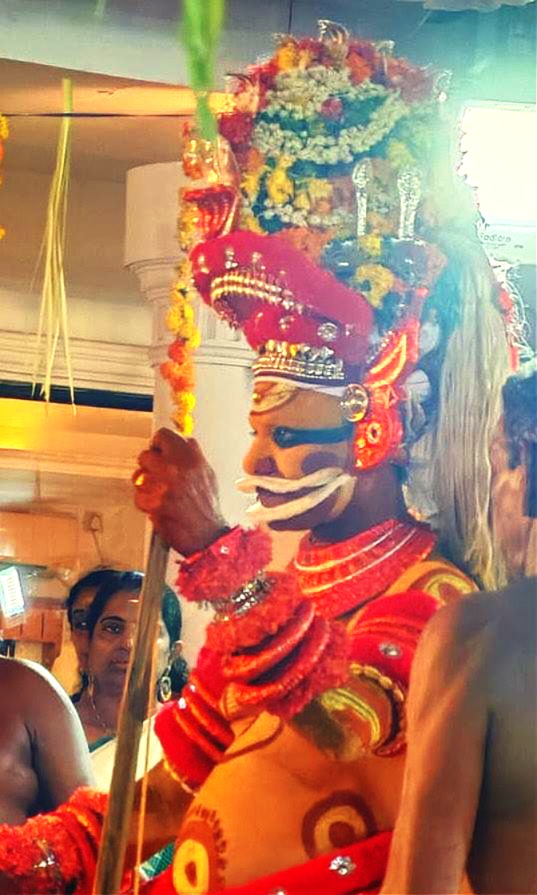
It felt poetic and powerful at once. In that split second, my detached curiosity dissolved into something esoteric and inexplicable. Before I could fully absorb the weight of those words, he snapped out of it and asked in a perfectly ordinary tone whether that was enough.
I replied yes, with more conviction than I anticipated, bowed once more, and walked away.
The feeling was surreal. My mind was gleaming with happiness. I had arrived as a curious spectator. I left with flowers in my hair and a blessing that felt suspiciously tailored.
For days after, I found myself replaying the moment in my head, half amused at my own skepticism and half protective of the strange tenderness it left behind. I may not have walked in seeking miracles, but I walked out carrying something softer and far more enduring, a reminder that faith in Kerala does not always demand blind belief. Sometimes it simply asks you to stand in line, listen carefully, and accept that wisdom can arrive in the voice of a painted elder who scolds, blesses, and negotiates domestic disputes with equal authority. These rituals are not relics staged for nostalgia. They are living theatres of emotion, counselling rooms without appointments, and poetry recitals without microphones. In preserving them, we are not merely safeguarding performance art. We are protecting a way of collectively processing grief, hope, conflict, and joy. If the future of Kerala must be modern, let it also be rooted, loud with Kadina Vedi, fragrant with Thumba and Thulasi, and generous enough to keep a space open for a grandfather who still has advice to offer.
Perhaps faith does not always begin with goosebumps. Sometimes it begins with a question about clapping hands and ends with poetry you did not know you were waiting to hear.


 Between Ink & Intuition
Leave a reply to Manpreet Singh Cancel reply